
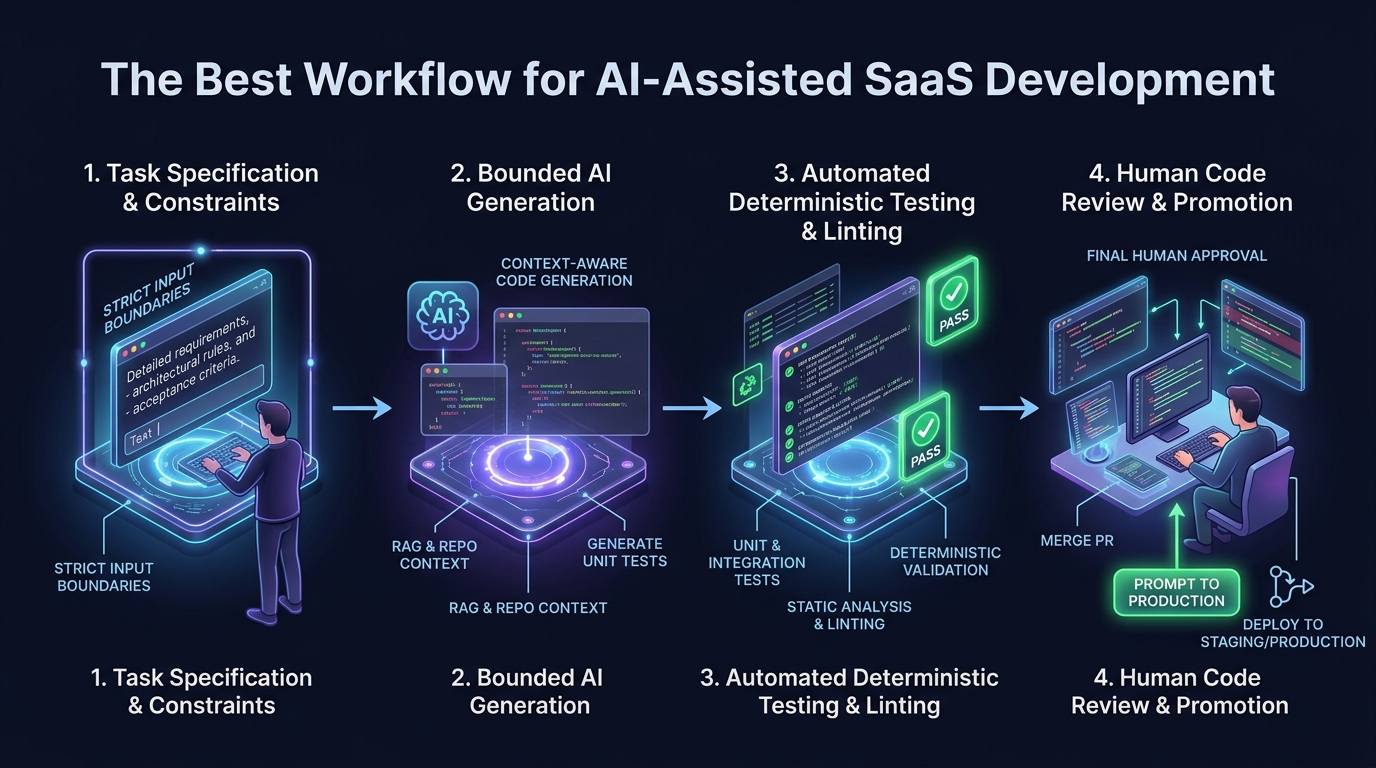
AI-assisted development works best when it combines fast implementation with predictable verification. A repeatable workflow helps developers benefit from coding agents without surrendering control over architecture and release quality.
1. Define the Requirement
Describe the user problem, expected behavior, acceptance criteria, and relevant constraints.
2. Inspect the Existing Code
Identify the current implementation, dependencies, data models, and related tests. Avoid asking an agent to recreate functionality that already exists.
3. Plan the Change
Break the task into small steps. Identify which files, schemas, interfaces, and permissions may be affected.
4. Implement and Review
Apply the change, inspect the diff, and look for unintended modifications. Review data access and authorization logic carefully.
5. Test the Behavior
Run the relevant automated checks and test important workflows manually where necessary. Include negative cases, not only successful scenarios.
6. Validate the Integration
Check that the new behavior works with authentication, billing, workspaces, and other connected application components.
7. Prepare the Release
Confirm configuration, migrations, deployment requirements, and rollback considerations.
Conclusion
AI-assisted development should be treated as a controlled engineering process rather than a sequence of prompts.
Starting from a documented foundation can make that process more consistent. Agentium Start combines reusable B2B SaaS infrastructure with structured recipes intended to support reviewed AI-driven changes.