
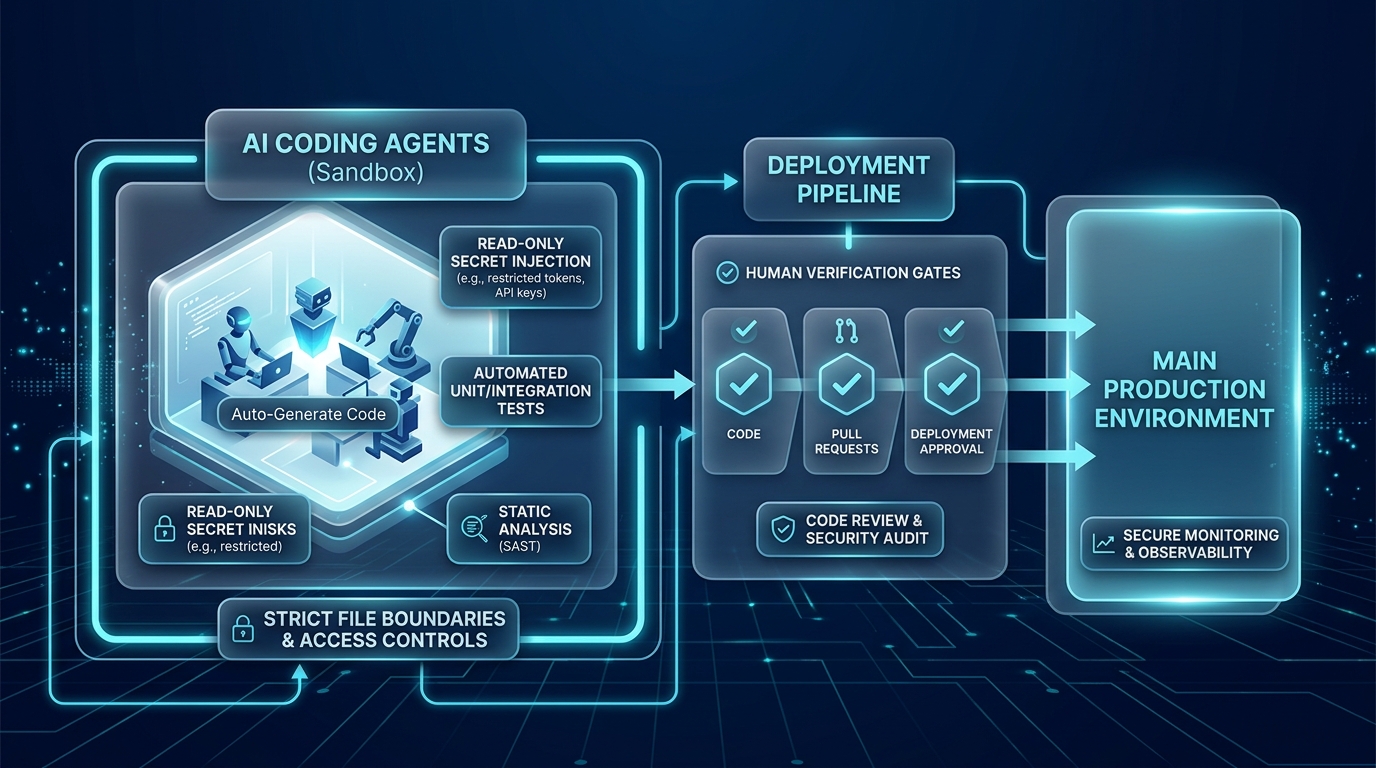
AI coding agents can make multi-file changes, implement features, and assist with repetitive development tasks. Their effectiveness depends on how well the work is scoped, reviewed, and verified.
Give the Agent Context
Explain the relevant architecture, coding conventions, business requirements, and files that define the feature. Include constraints that must not change.
Keep Changes Small
Ask for one coherent change at a time. A narrowly scoped update is easier to review and test than a broad rewrite involving authentication, database models, and user interfaces simultaneously.
Define Acceptance Criteria
Specify expected behavior, validation rules, error cases, and relevant permissions. Ask the agent to explain which files it plans to change before applying a complex modification.
Protect Critical Workflows
Use version control, inspect diffs, and run tests before merging changes. Review authorization-sensitive code and database migrations particularly carefully.
Retest Connected Features
A change to subscription logic may affect billing, permissions, onboarding, and account settings. Identify dependent workflows and rerun the relevant checks.
Document the Outcome
Record what changed, why it changed, which tests passed, and what remains unresolved.
Conclusion
The goal is not to prevent AI agents from making mistakes. It is to make mistakes easier to detect and contain.
Agentium Start provides structured AI development recipes for extending its B2B SaaS source kit. Explore the product foundation to learn more about its review-oriented approach.