
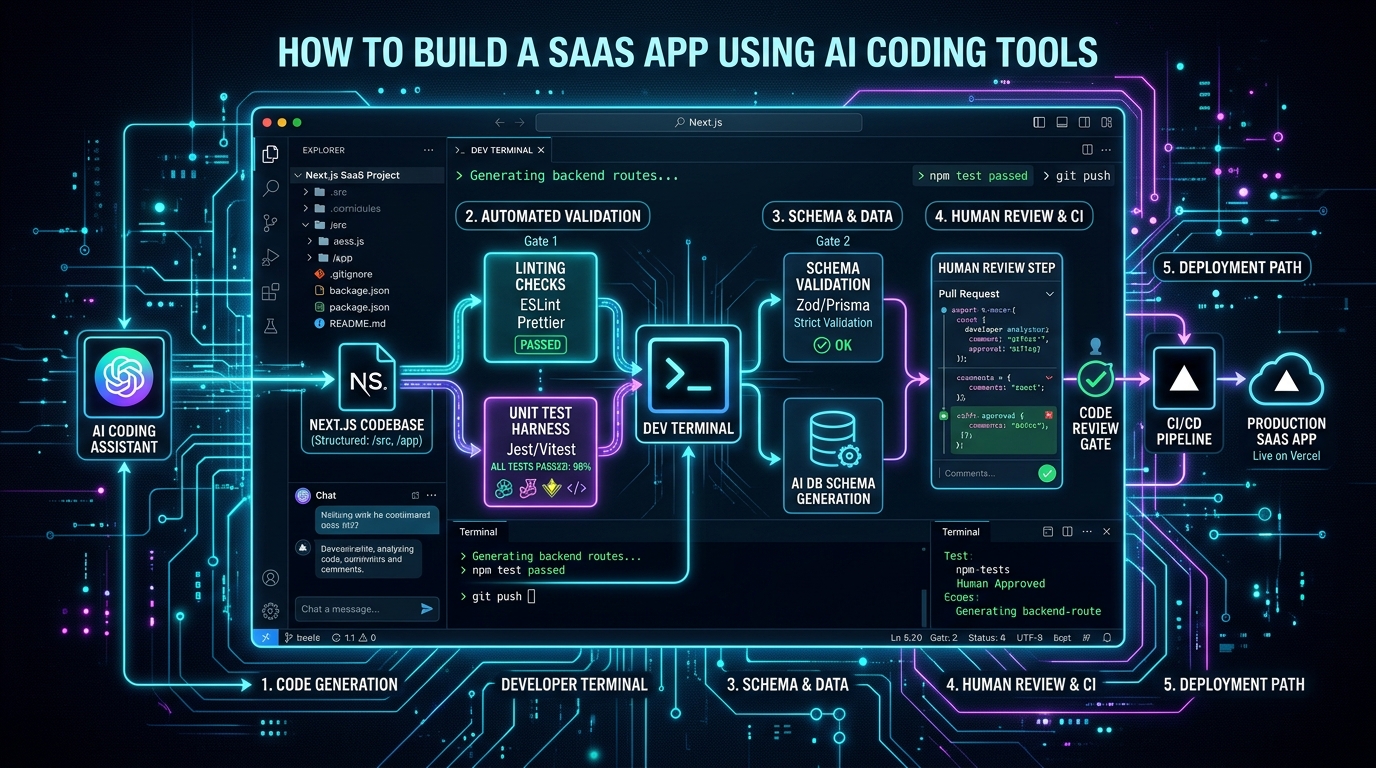
AI coding tools can help developers create application components, explain unfamiliar code, generate tests, and implement features from structured requirements. But building a SaaS product requires more than asking an AI assistant to generate a complete application.
Start With a Clear Architecture
Define your technology stack, database schema, authentication approach, authorization model, and main business workflows before making large code changes.
A structured foundation makes it easier to keep AI-generated changes consistent.
Build One Workflow at a Time
Instead of requesting an entire application in one prompt, divide the work into small, testable changes.
For example, implement workspace creation, verify it, and then introduce member invitations. This makes defects easier to isolate.
Review Generated Code
Inspect database queries, permissions, input validation, error handling, and dependency changes. AI-generated code can look plausible while containing integration or security problems.
Run Tests After Each Change
Use existing automated checks, add tests for new behavior, and rerun affected workflows after modifications.
Deploy Deliberately
Validate environment variables, database migrations, external service credentials, and production configuration before releasing the application.
Conclusion
AI coding tools are most useful when they work within a clear architecture and a repeatable review process.
Agentium Start provides an editable B2B SaaS foundation and structured AI development recipes designed to help developers extend an existing codebase. Explore the Agentium Start source kit to see how this approach fits your workflow.