
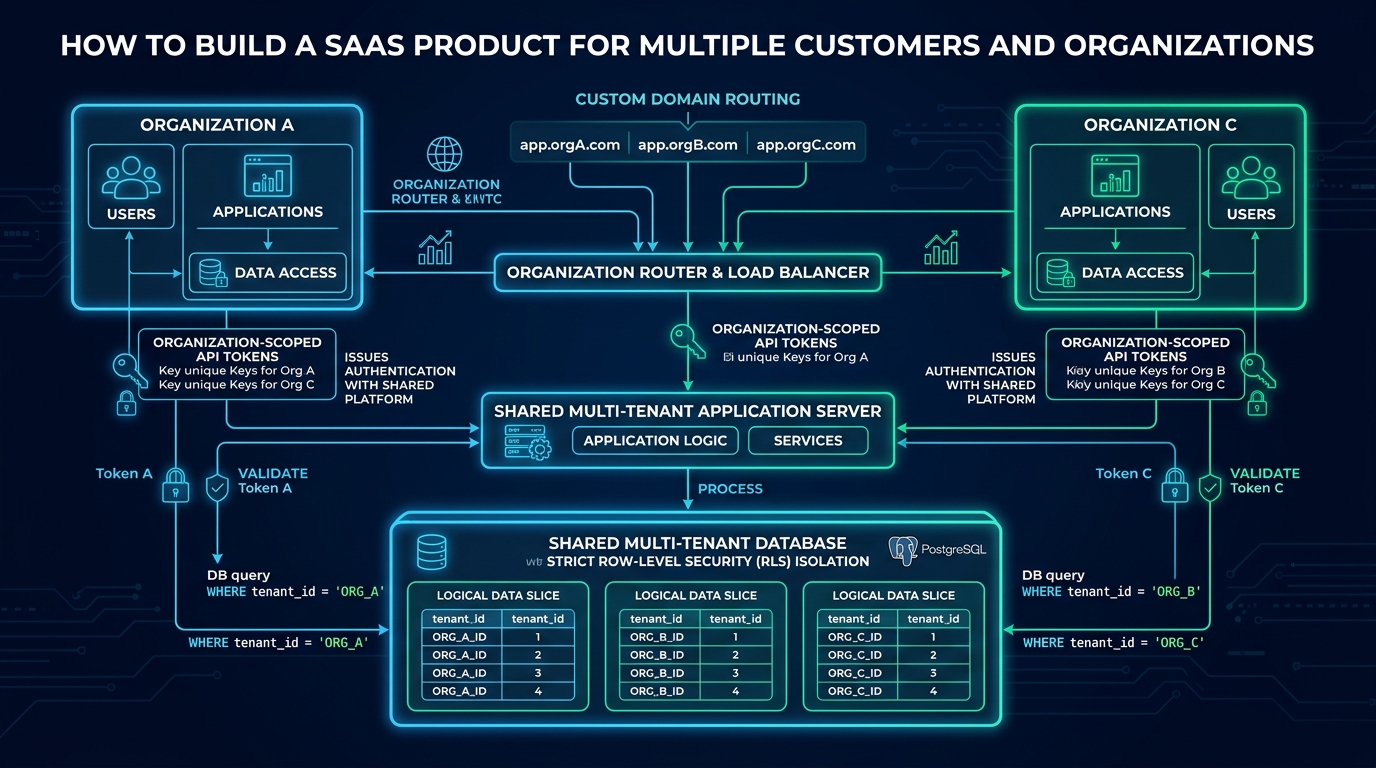
Many B2B products serve several companies through a shared application. Supporting multiple organizations requires clear ownership, membership, authorization, and billing rules.
Define the Organization Model
Decide whether each customer corresponds to one workspace or whether customers can manage multiple workspaces. Make the relationships explicit in your data model.
Support Memberships and Invitations
Allow authorized users to invite teammates and manage membership. Validate invitation acceptance and prevent unauthorized access.
Isolate Customer Data
Associate tenant-specific resources with their owning organization. Enforce tenant boundaries in server-side operations and database queries.
Design Billing Relationships
Determine whether subscriptions belong to individual users, organizations, or another business entity. Connect payment records and entitlements to the correct owner.
Test Organization Switching
Verify that switching workspaces updates the visible data and permissions correctly. Test attempts to access resources from another organization.
Conclusion
Multi-organization support is a core architectural capability for many B2B SaaS products.
Agentium Start provides a foundation with workspaces, memberships, invitations, role checks, and a Paddle billing reference path. Review its implementation scope before adopting it for your specific product.