
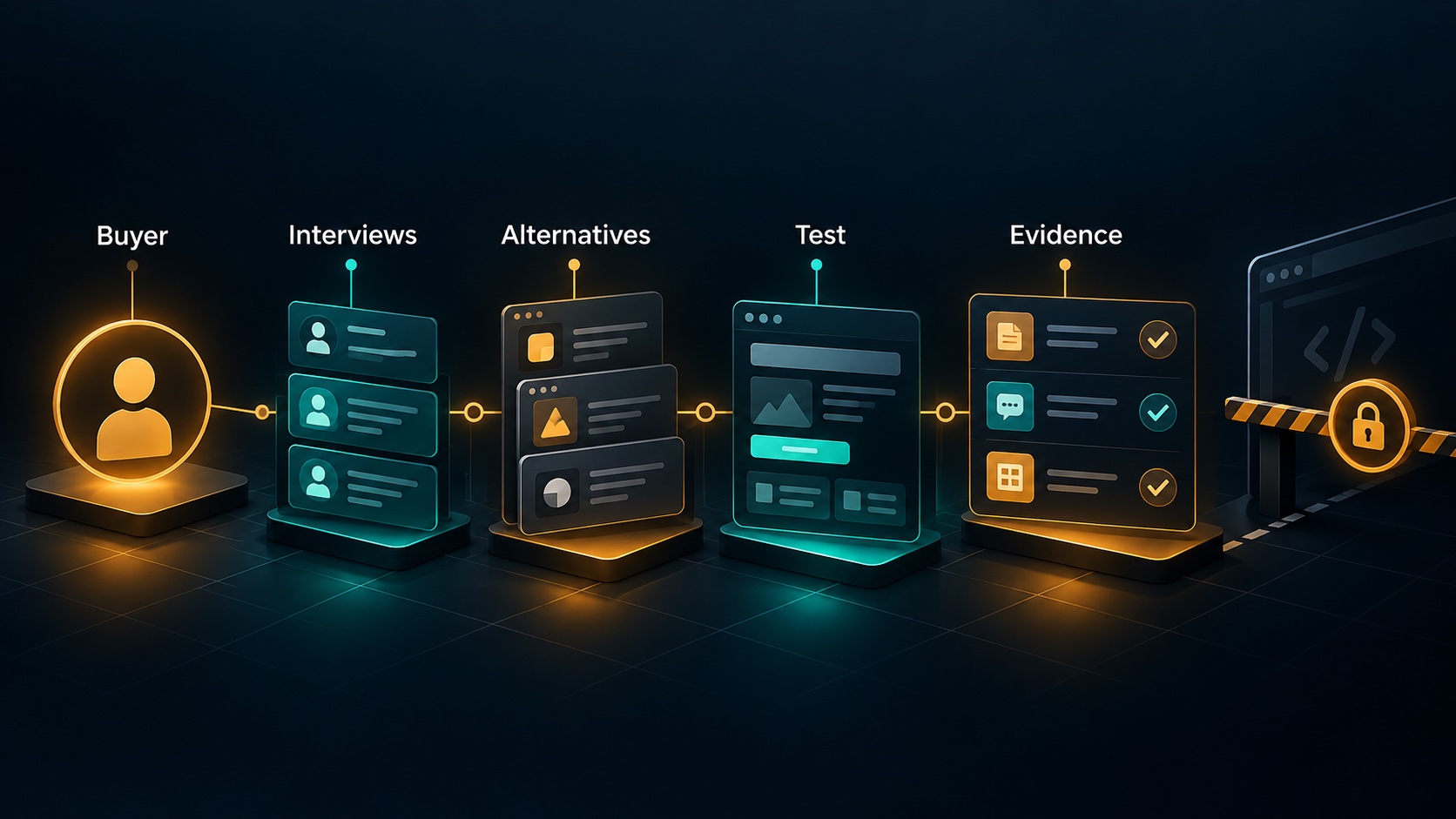
A technically impressive product can fail if customers do not have a strong reason to use or pay for it. Validating demand before building reduces the risk of investing in the wrong problem.
Identify the Target Customer
Define the industry, company size, user role, and specific situation in which the problem occurs.
Interview Potential Buyers
Ask how they currently solve the problem, what it costs them, and what limitations they experience. Look for actual behavior rather than relying only on hypothetical enthusiasm.
Research Existing Alternatives
Study competitors, manual processes, spreadsheets, and adjacent tools. Identify an underserved workflow or a meaningful improvement you can deliver.
Test the Value Proposition
Create a landing page, prototype, demo, or waitlist to explain the proposed benefit and measure relevant engagement.
Define the MVP
Build only what is necessary to test the most important assumption.
Measure Evidence
Track qualified sign-ups, willingness to pay, pilot participation, and repeated use. Interpret each signal in context rather than treating clicks as proof of a viable business.
Conclusion
Validation should shape the product before extensive engineering begins.
Once you have evidence of demand, a suitable SaaS foundation can help you move from prototype to a working application without rebuilding every common component.