
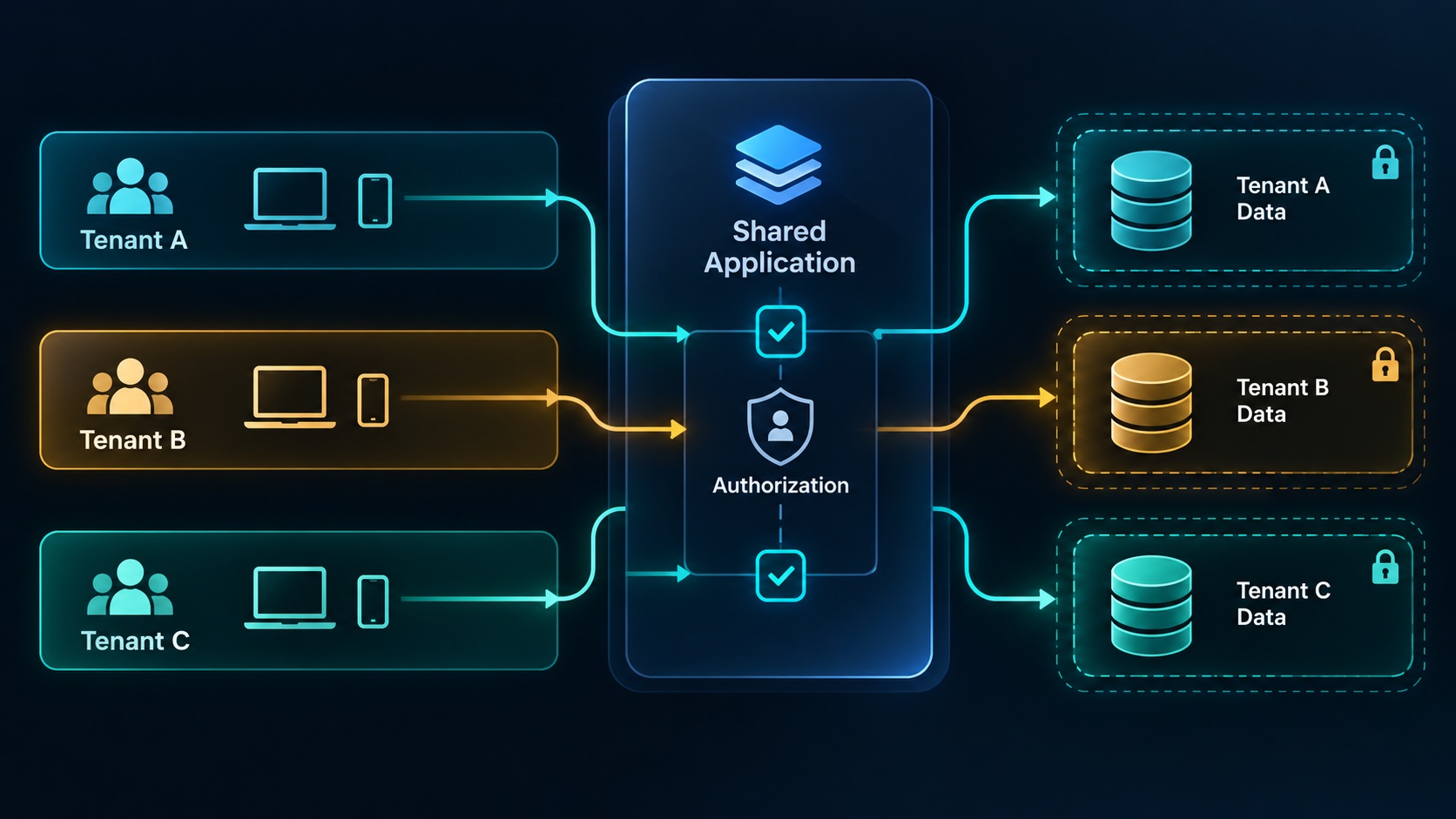
Multi-tenancy allows one software application to serve multiple customers while maintaining appropriate separation between their data and permissions. It is a foundational architectural decision for many B2B SaaS products.
What Is Multi-Tenancy?
A tenant commonly represents a customer organization. Its users, resources, settings, and subscriptions are associated with that organization.
For example, a project management application may allow several companies to use the same deployment while keeping their projects separate.
Choose a Data Isolation Strategy
Common approaches include a shared database with tenant identifiers, separate schemas, or separate databases. Each involves different operational, security, and cost trade-offs.
The appropriate model depends on workload, compliance requirements, isolation needs, and operational complexity.
Design Workspace Memberships
A user may belong to one or several organizations. Model memberships explicitly and associate roles and permissions with the correct scope.
Enforce Authorization Everywhere
Validate workspace membership and resource ownership on the server. Do not rely on a frontend workspace selector to protect customer data.
Apply consistent checks to API endpoints, background jobs, database operations, and administrative workflows.
Test Tenant Boundaries
Create tests that attempt to read or modify another tenant's records. Include indirect access paths and operations involving shared resources.
Conclusion
Multi-tenancy is a data isolation and authorization problem, not just a database schema choice.
Agentium Start includes workspaces, memberships, role checks, and a multi-tenant B2B application foundation. Review its documented features before determining whether its implementation fits your security requirements.