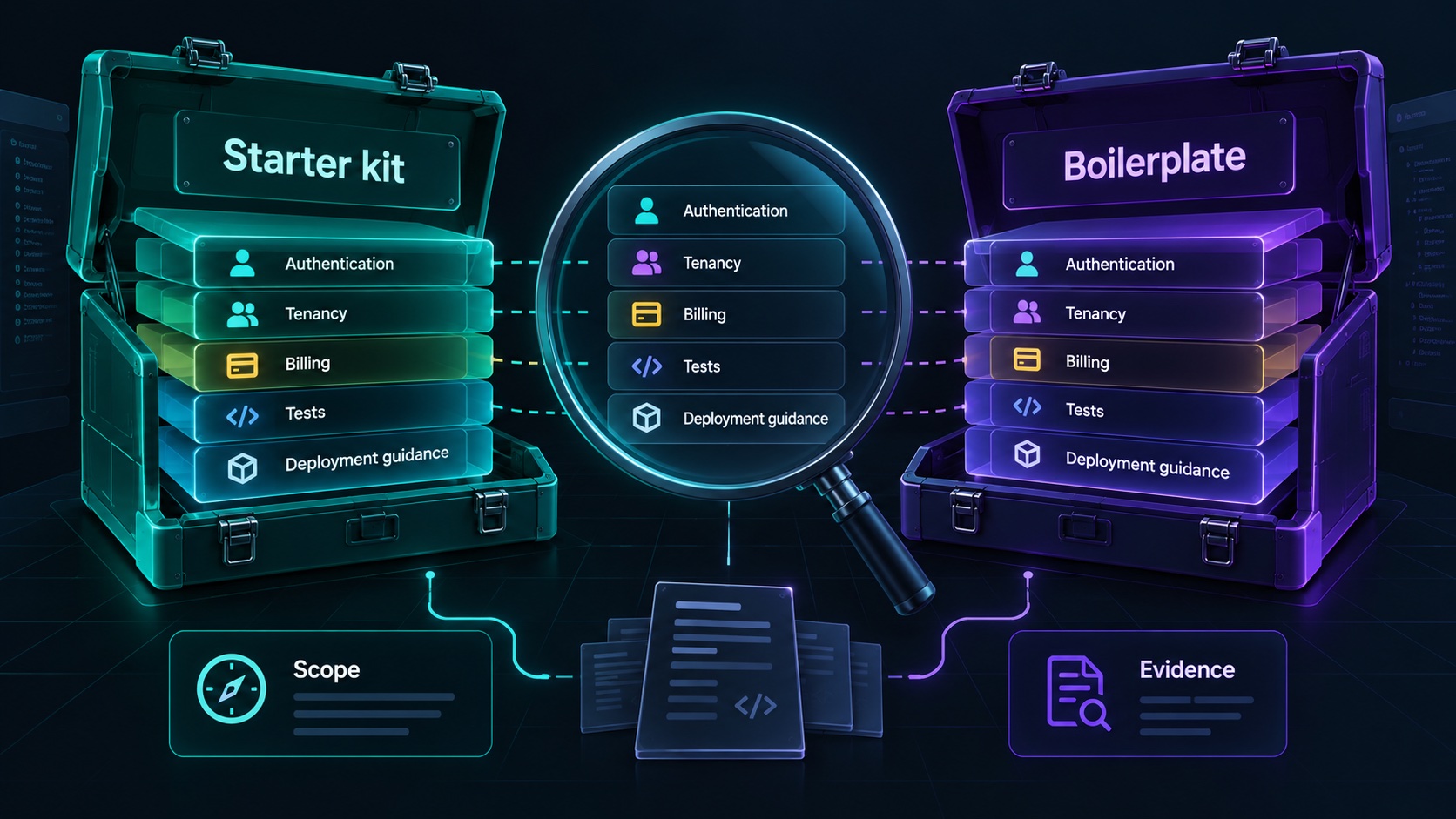
The terms SaaS starter kit and SaaS boilerplate are often used interchangeably. Both describe reusable starting points for software applications, but individual products can differ significantly in scope.
A boilerplate generally emphasizes reusable code and common application infrastructure. A starter kit may also include setup instructions, design templates, documentation, example workflows, and launch guidance.
These are tendencies, not strict industry definitions.
What Matters More Than the Name?
Look beyond the marketing label and inspect what is actually implemented.
Does the project include working authentication? Can users belong to multiple workspaces? Are permissions enforced on the server? Is billing connected to application entitlements? Are tests and deployment instructions included?
These questions provide more useful information than whether a vendor calls its product a starter kit, template, or boilerplate.
Consider the Intended Buyer
A solo founder may prioritize a low-cost codebase that can be customized independently. An agency may need multiple developer seats and permission to deliver client projects.
An experienced engineering team may care most about architecture and dependency choices, while a less experienced team may place greater value on documentation.
Check the Boundaries
A landing-page template is not the same as a complete application. Similarly, an example integration is not necessarily a fully supported production implementation.
Confirm which features are implemented, partial, examples, or planned catalog items.
Conclusion
Choose the reusable foundation that best fits your intended product and development workflow.
Agentium Start describes its implementation scope by feature status and provides a source kit intended for developers building B2B applications. Review its features to determine whether its scope fits your project.