
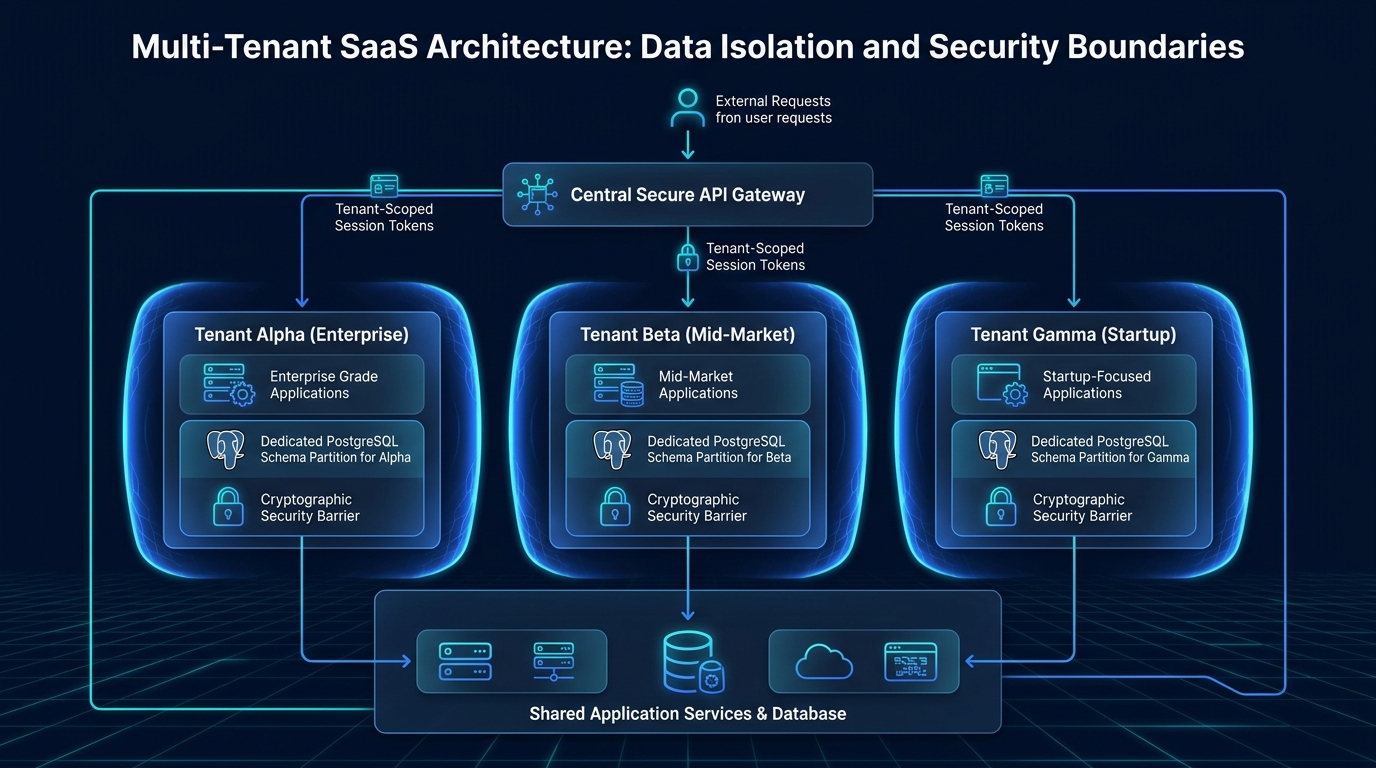
Multi-tenant SaaS architecture lets several customer organizations use the same product while preserving clear boundaries around their data and operations. The central design question is how every part of the system knows which customer it is serving and prevents access beyond that customer's authorized scope.
Start by defining the tenant. In a B2B application, it may be a workspace, company account or independently managed business unit. A signed-in person is not necessarily the tenant: one person may belong to several organizations with different permissions in each.
Choose an isolation model you can operate
Three common designs offer different operational tradeoffs. Shared tables store tenant-owned records together and associate each record with a tenant identifier. Separate schemas divide database objects within one database system. Separate databases give each tenant a more distinct storage boundary.
| Model | Operational benefit | Design pressure | |