
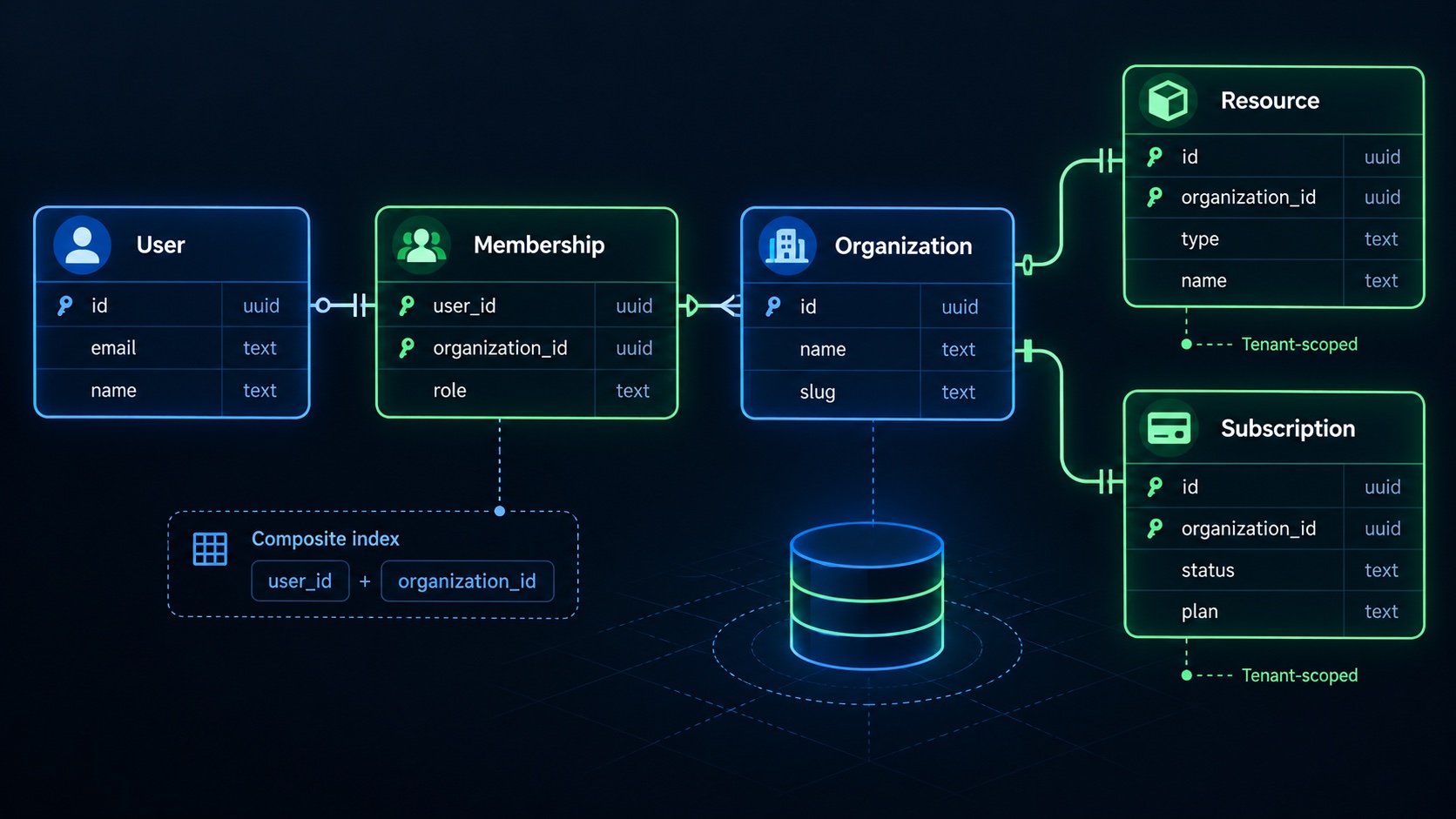
Database design strongly influences the security and maintainability of a multi-tenant SaaS application. The model should represent customers, users, workspaces, memberships, and business resources clearly.
Separate Users From Organizations
A user represents an identity. A workspace represents an organization or tenant. A membership connects the two and can carry role information.
This structure supports applications where one person belongs to multiple organizations.
Associate Resources With Tenants
Tenant-specific records should have explicit relationships to their owning workspace or organization.
Use database constraints where appropriate and ensure queries include the correct tenant scope.
Plan Indexes and Constraints
Consider indexes for common tenant-scoped queries and constraints that prevent invalid relationships or duplicate memberships.
Handle Migrations Deliberately
Schema changes must preserve existing data and be tested before production deployment. Consider rollback and recovery procedures.
Test Isolation
Create tests that attempt to access records from a different workspace, including through indirect relationships.
Conclusion
A good multi-tenant schema makes ownership and authorization easier to reason about, but schema design alone does not guarantee security.
Agentium Start uses Prisma and PostgreSQL within a B2B SaaS foundation. Review its documented architecture and adapt it to your application's data-isolation requirements.