SaaS Starter Kit vs No Code for a Custom B2B App
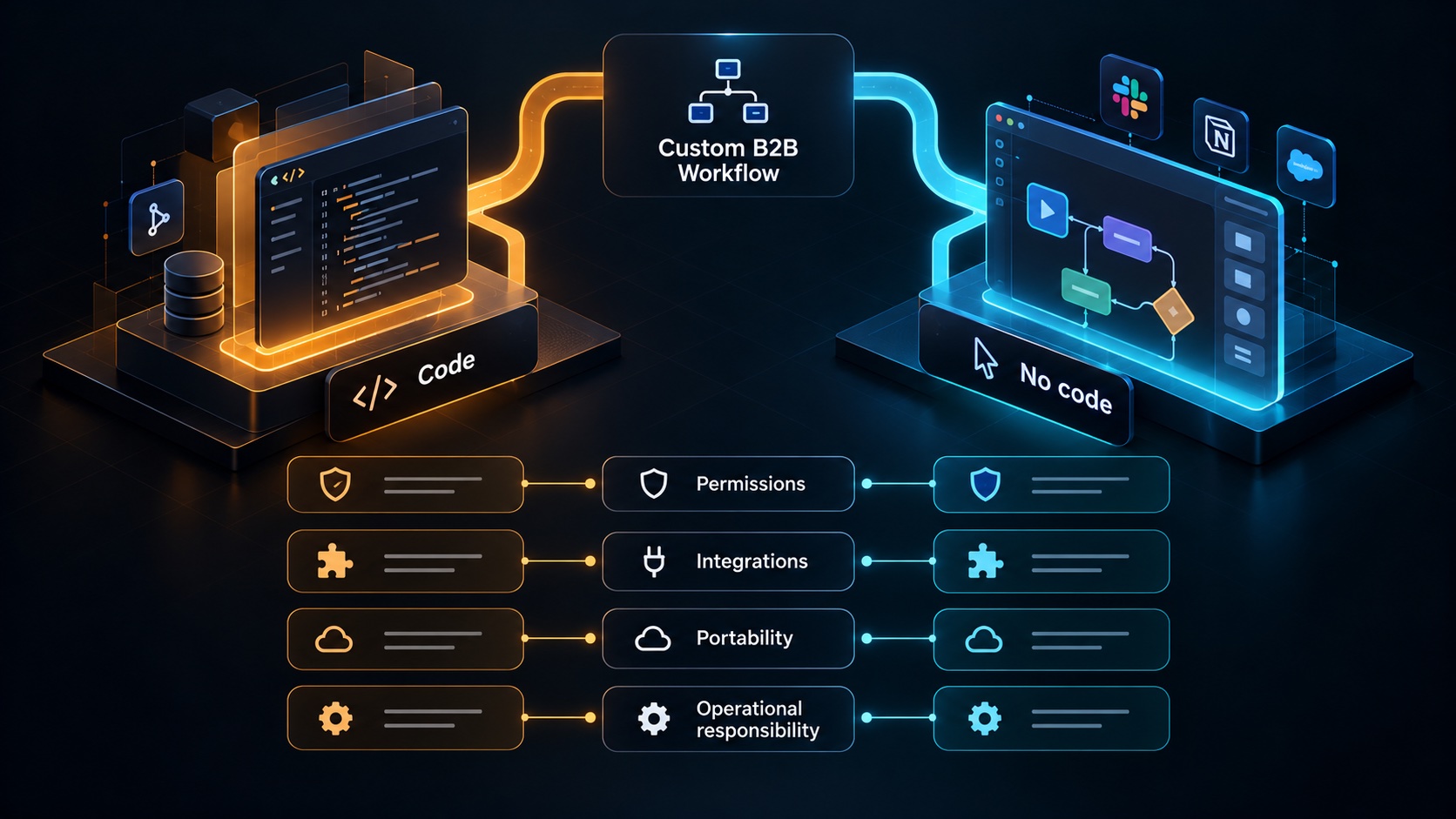
Compare a SaaS starter kit and no-code platform for B2B apps using workflow complexity, permissions, integrations, operating skills, and portability.
Tradeoffs before tool lists
Start with the job, the constraints, and the evidence. These comparisons explain when each approach fits and where it falls short.
Compare a SaaS starter kit and no-code platform for B2B apps using workflow complexity, permissions, integrations, operating skills, and portability.
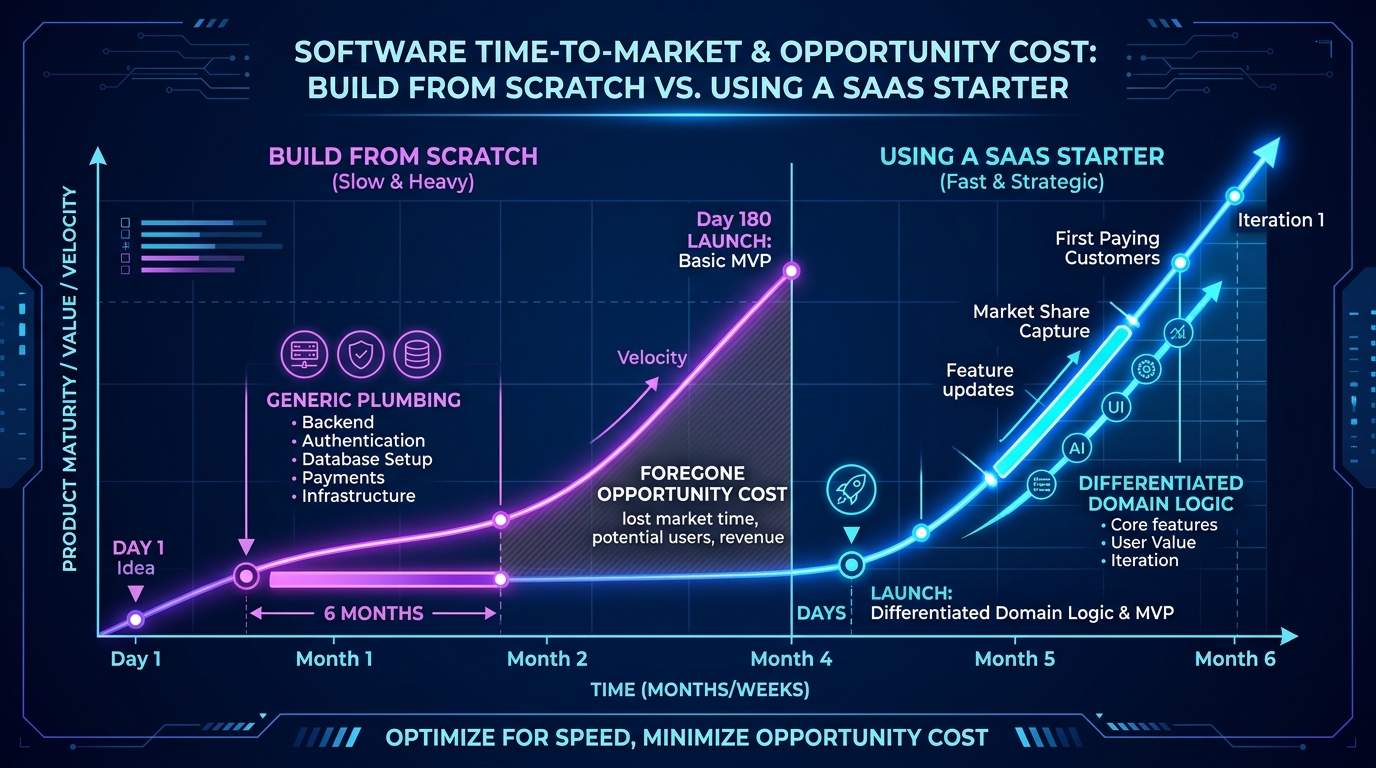
Compare a SaaS boilerplate with building from scratch using workflow fit, adaptation effort, maintenance, and a clearly labeled example cost model.
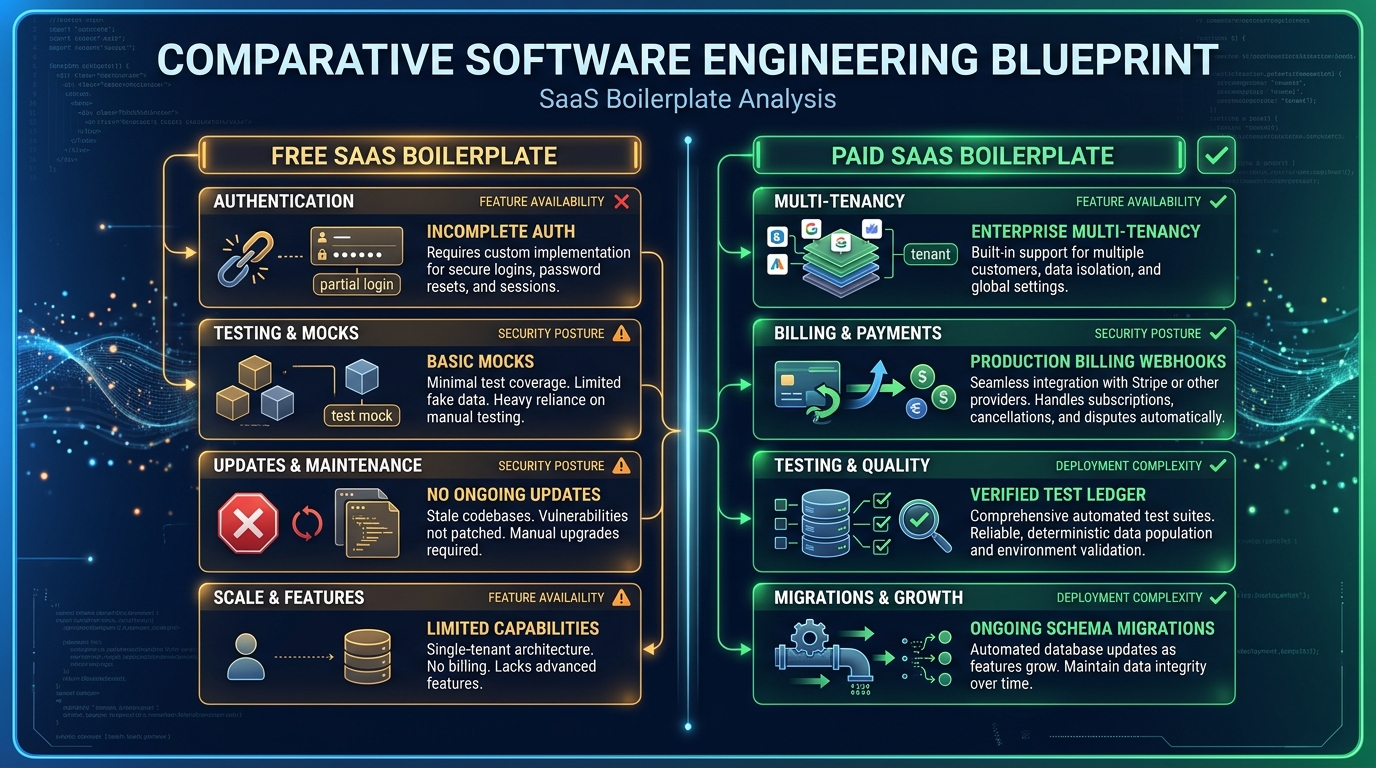
Developers can choose from free open-source starter projects and paid SaaS boilerplates.
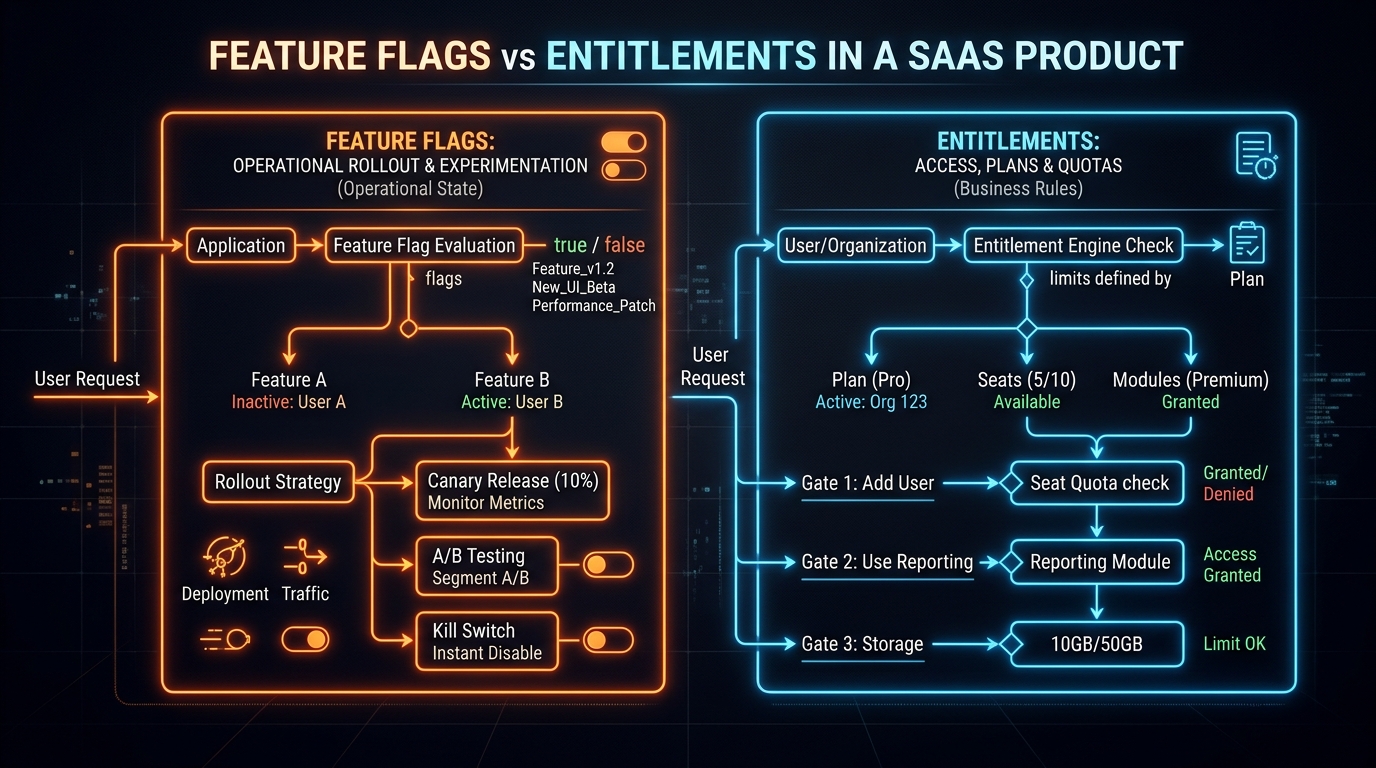
Compare feature flags vs entitlements and learn how release controls, paid access, user permissions, and usage quotas should work together in SaaS.
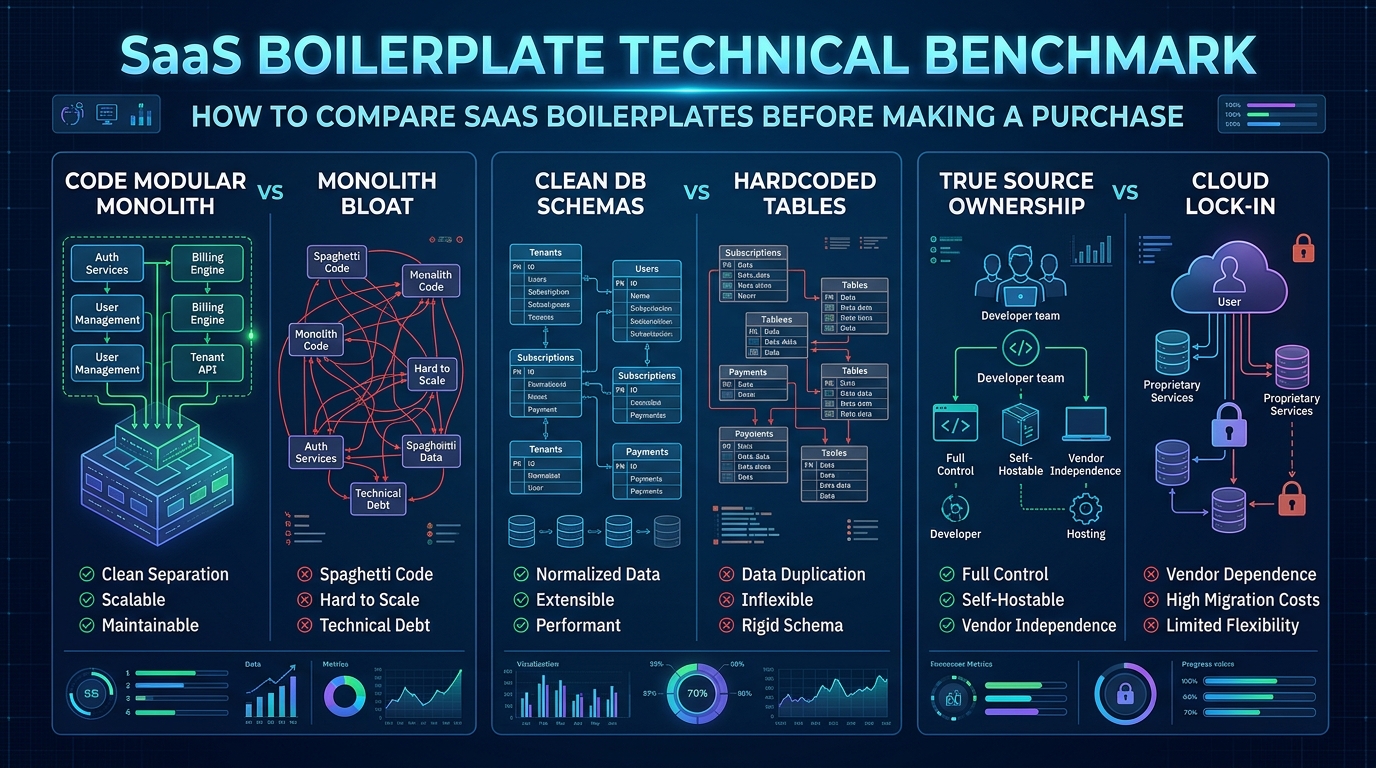
Comparing SaaS boilerplates requires more than looking at screenshots, technology logos, or advertised feature counts.
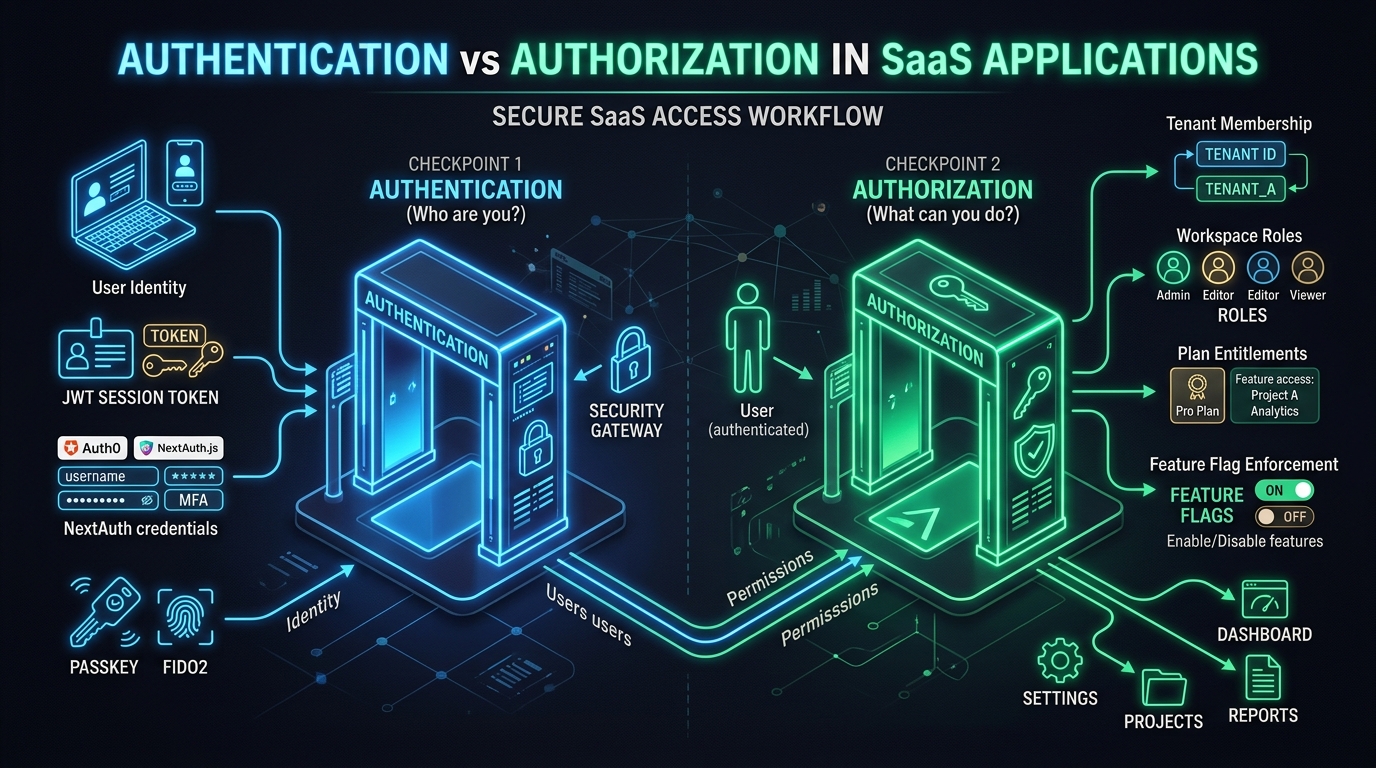
Understand authentication vs authorization in SaaS, including sessions, workspace membership, resource access, paid entitlements, and server checks.
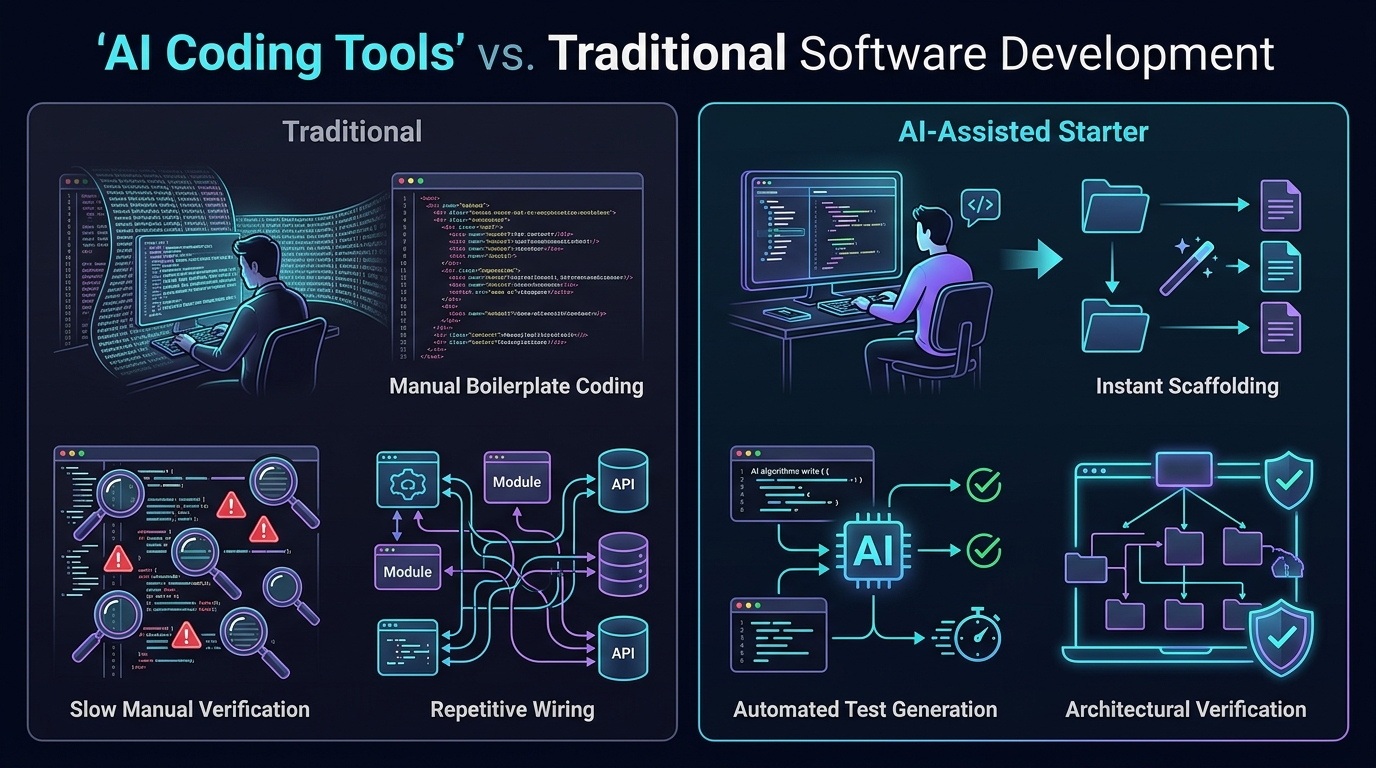
AI coding tools are changing how software teams write and maintain applications.
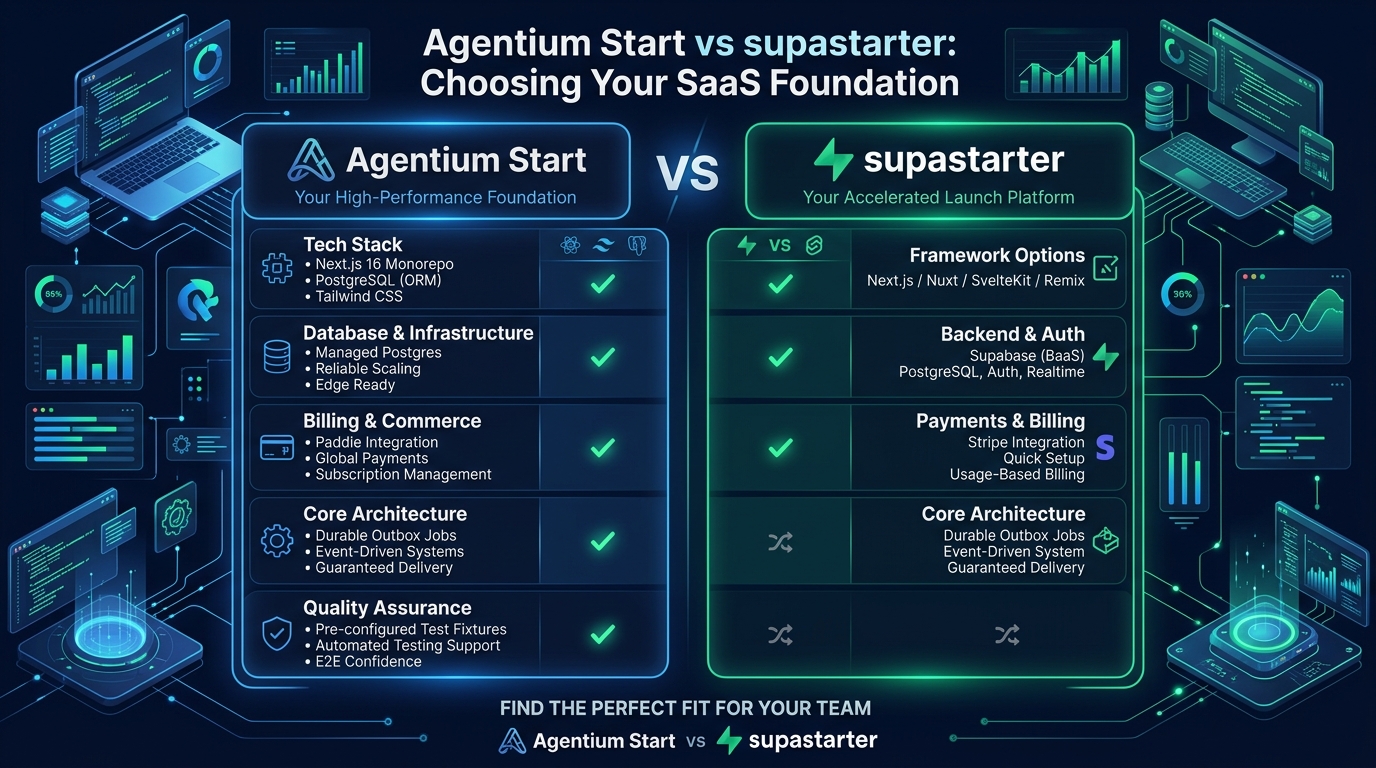
Compare Agentium Start and supastarter by architecture fit, AI workflows, provider setup, license scope and the work needed to launch your own application.
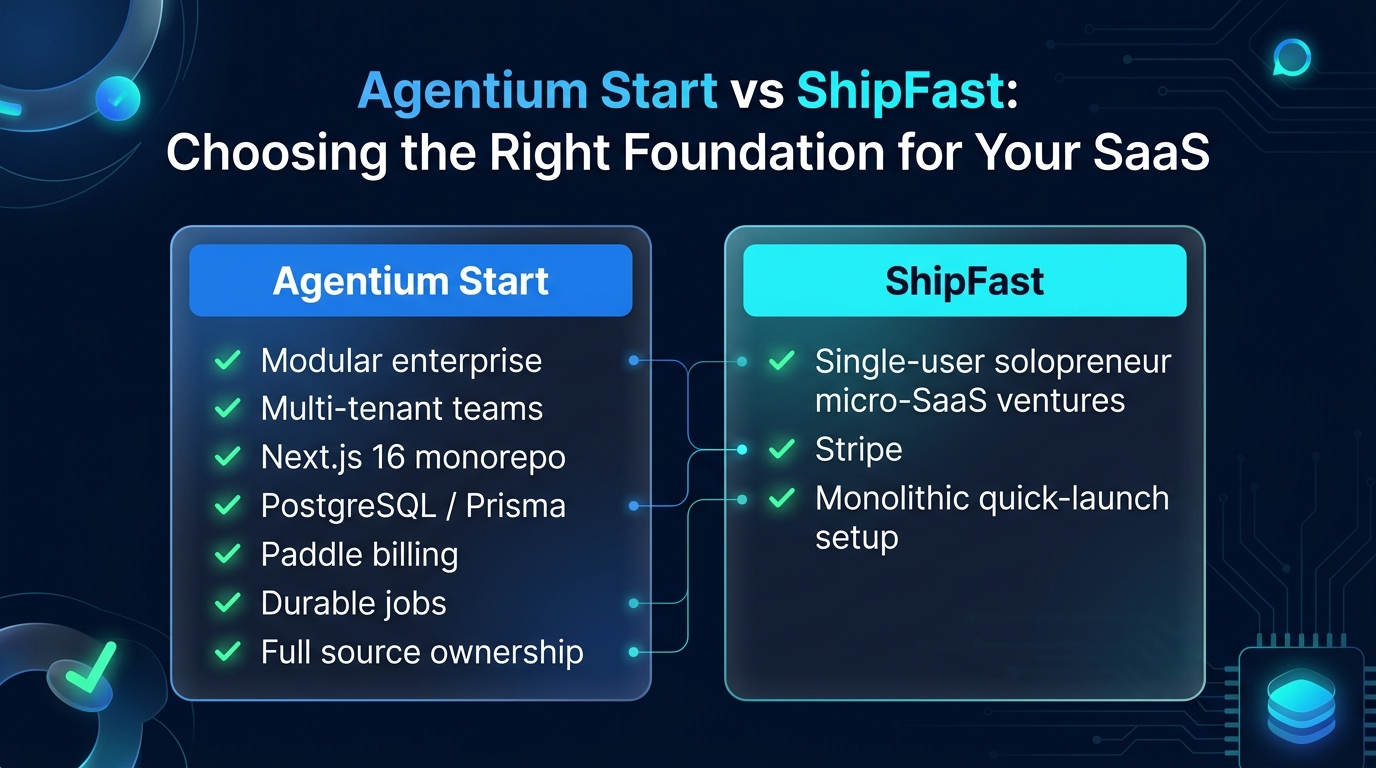
Compare Agentium Start and ShipFast by supported workflows, setup, source licensing, AI-assisted changes and verification—not feature-count claims.
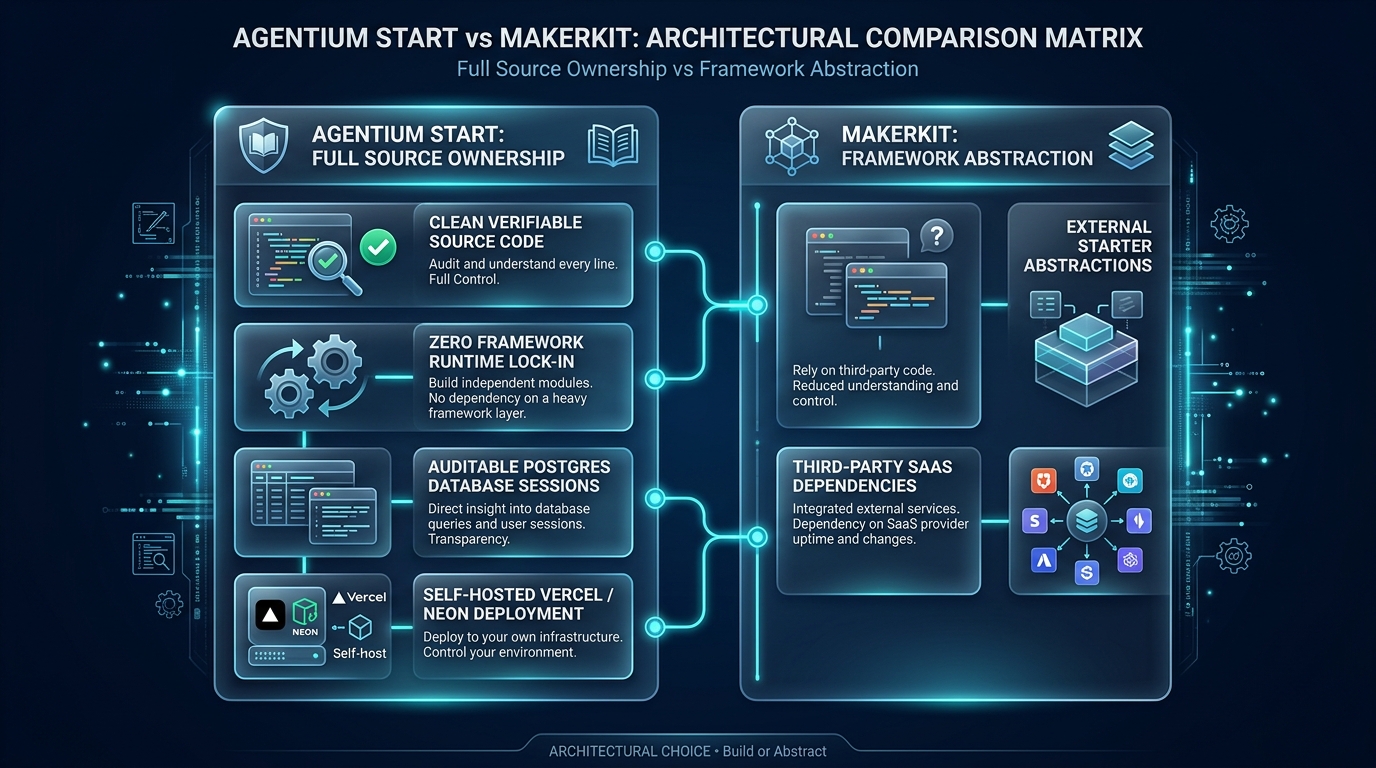
Compare Agentium Start and Makerkit by B2B workflows, developer experience, source rights, change review and the effort to adapt your next feature.
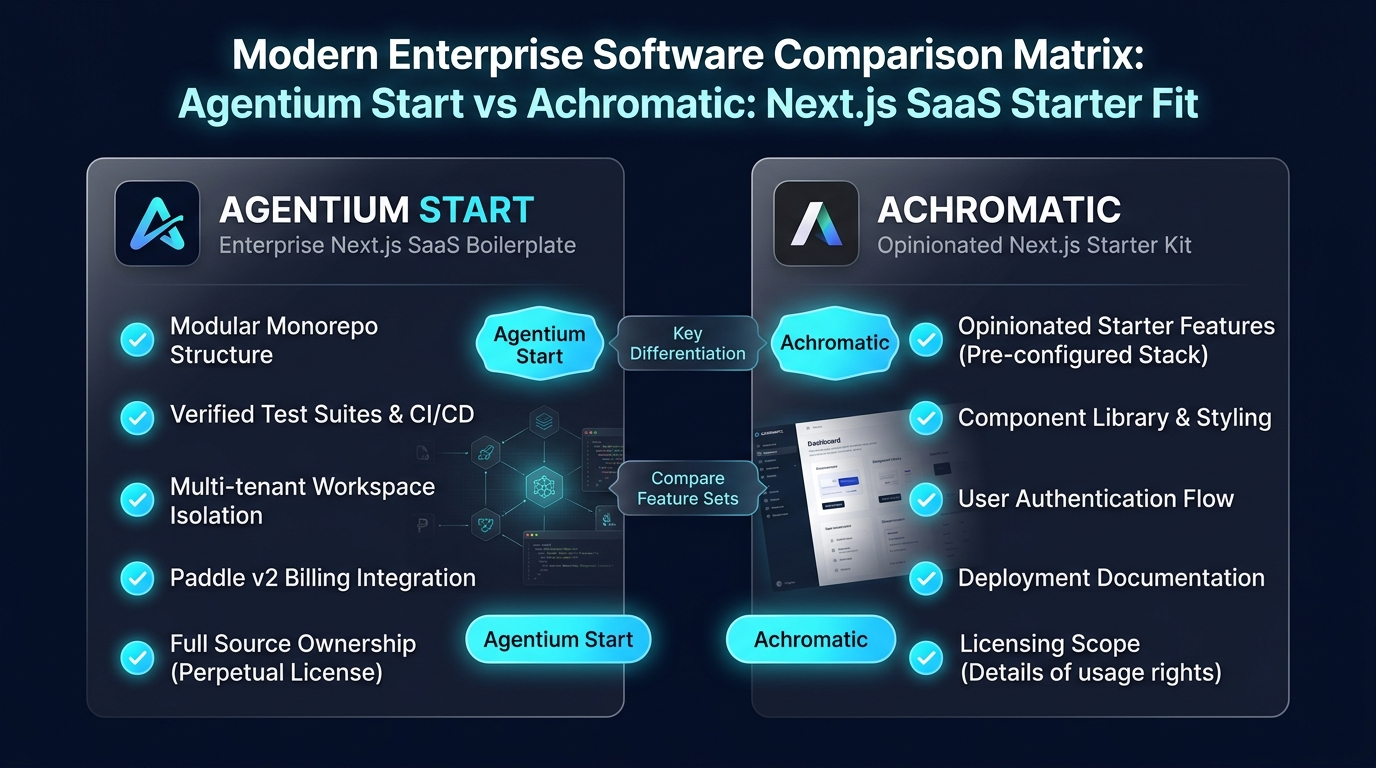
Compare Agentium Start and Achromatic by architecture, application scope, licensing, support and the first custom workflow you need to build.